
Ed, Blundells School, Tiverton, Devon RAeC certificate 14112 dated 28 Jul 1936, taken on DH.60 at Portsmouth Aero Club prev. Clerk, Air Ministry, 29 May 1940 to Feb 1941 prev. exp. 60 hrs Address in 1941: Carrog, Llanddeiniol, Llanrhystoyd, Cardiganshire (Tel. Llanrhystoyd 1) Next of kin (father): Mr Worcester, Chinese Maritime Customs, Shanghai Postings: 6FPP, 8FPP One accident, his fault: - 6 Jun 1941, forced landing in Magister R1980 after he got lost in poor visibility. [BOAC Contract, Terminated 25 Sep 1941] [Seconded back to ATA 30 Oct 1941] [ATA contract terminated 30 Jan 1942] m. 5 Oct 1942 in London, Anne Rosemary [Baker, d. 1954] Temp. Sub-Lieut., RN from 19 Oct 1942 Editor of 'Aviation Report' in 1954: "EDITOR WINS £4,000 FOR SECRETS LIBEL RICHARD GRAY WORCESTER, editor of Aviation Report, was awarded £4,000 damages and costs in a libel action in the Queen's Bench Division yesterday. Aviation Studies, Ltd. his publishers, were awarded £2,500 and costs. Mr. Worcester sued Mr. Thurstan James. editor of The Aeroplane, and the publishers. Temple Press Ltd. He claimed that an article in The Aeroplane meant that he was unpatriotic and had broken security regulations. The defendants denied that the words complained of were defamatory and said they were fair comment on a matter of public interest Summing up after the eight day hearing, Mr. Justice Cassels said serious charges had been made of unpatriotic conduct," " selling stories which other people withheld under voluntary censorship" and "not playing the game.". IMr. Worcester was alleged to have offended against the "D" scheme —dealing with news that could be published about new Service aircraft. He claimed that in every instance the information had already appeared in the foreign Press. ln January, 1953, the Manchester Guardian. the News Chronicle and The Aeroplane all mentioned aircraft and blamed Aviation Report for the reference. Major Stewart, of the Guardian and Mr. Walker of the News Chronicle, who were so concerned about the release of secret matter, had certainly given further publicity to things supposed to be secret. The judge said aviation writers seemed to live on each other. The plaintiffs culled bits from the foreign Press, the News Chronicle got an idea from the Manchester Guardian. and Mr. James got an idea from both." - News Chronicle, 13 Apr 1954 m. Jan 1956 in London, Ingeborg [Rosenfeld] Instrumental in the cancellation of TSR2 in 1965, a decision later described as " a devastating blow to the RAF and a devastating blow to Industry." Test Pilot Wing Commander R P Beamont CBE DSO* DFC* FRAeS DL was of the opinion that "Its cancellation could not have been justified on any viable technical grounds."
A 1998 'In Hindsight' report says "Nevertheless, a combination of Lords Mountbatten and Zuckerman, the NA39 and the F-111, George Wigg, Richard Worcester, Mary Goldring, ‘Nothing East of Suez and, finally, Denis Healey prevailed. ‘We are not here to support overgrown mentally-retarded schoolboys , he said." Address in 1975: Sussex House, Parkside, Wimbledon d. Feb 2003 - London His obituary from The Times: "Richard Worcester Wartime pilot who as a critical writer on aviation became the tormentor of Britain’s planemakers A QUIETLY spoken wartime pilot, Richard Worcester became the British aircraft industry’s most articulate critic from the 1950s onwards. His Aviation Report, an outspoken newsletter which he launched in 1952 — and wrote and printed himself — was the planemakers’ least welcome reading. The industry, he argued, was wasting public money on too many ill-considered and uncompetitive aircraft projects. In the 1960s Worcester urged the Government to rationalise the industry and, most controversially, to scrap “pretentious imperial projects” such as the TSR2 attack bomber, and instead to buy the American F111. His arguments got the attention of Whitehall and Parliament, where public spending on the aircraft industry was getting out of control. Public policy on aviation, said Worcester, was administered by aeronautically uninformed civil servants and politicians. Worcester filled the “information vacuum” with his own brand of aeronautical authority — original analysis and pungent comment bulked out with weighty extracts from impressively learned (if not always relevant) American scientific research papers. By 1964 Worcester was advising Harold Wilson’s Labour Government on air policy. He was undoubtedly influential in Roy Jenkins’s cancellation of TSR2 and other projects, and in Denis Healey’s ordering of American F111s (though these were later cancelled). His studies also facilitated the industrial mergers which rationalised the planemakers into two main companies, British Aircraft Corporation and Hawker Siddeley. Richard Gray Worcester was born in 1917 and educated at Blundell’s School and the Airspeed School of Aeronautical Engineering and, after the war, at George Washington University. He learnt to fly in 1934 at the age of 17. Early in the Second World War he served as a technical officer at the Aeroplane and Armament Experimental Establishment at Boscombe Down, and from 1943 to 1945 he was an RNVR pilot in the Admiralty Directorate of Air Warfare. After the war he joined the editorial staff of The Aeroplane, specialising in pilot reports on new aircraft. (The March 2003 issue reprints his stylish air test report on the 1950 Airspeed Ambassador airliner.) Disillusioned by what he considered to be the sycophancy of the British aviation trade press, Worcester left to form Aviation Studies International. The first issue of Aviation Report appeared in 1952. Published twice a week, with no advertising and no pictures, it commanded about £10 a copy in today’s money. Aviation Report infuriated the aircraft industry, and was sometimes unfair, but the subscription list grew as aircraft industry managers who could not wait for the director’s copy demanded their own. Subscriptions poured in from all over the world, from government departments, foreign planemakers, newspaper air correspondents, and the aircraft industry’s customers. In 1954 The Aeroplane wrote an editorial describing Worcester’s writings as, in effect, recidivist. He sued for libel and won damages of about £100,000 in today’s money. In addition to Aviation Report, he published special analyses, also commanding substantial prices. The most famous was his 1957 An Industry Gone Mad, an analysis of the international airline industry’s “panic buying” of jet airliners. Worcester insisted that jets would always cost more to operate than turboprops, and would put fares up. This, though, was not to prove his most accurate policy analysis: jets were to sweep propellers from the long-haul passenger routes within ten years, and London-Nice by jet is now cheaper than London-Norwich by bus." Download ATA Pilot Personal Record (.zip file): |
- Details

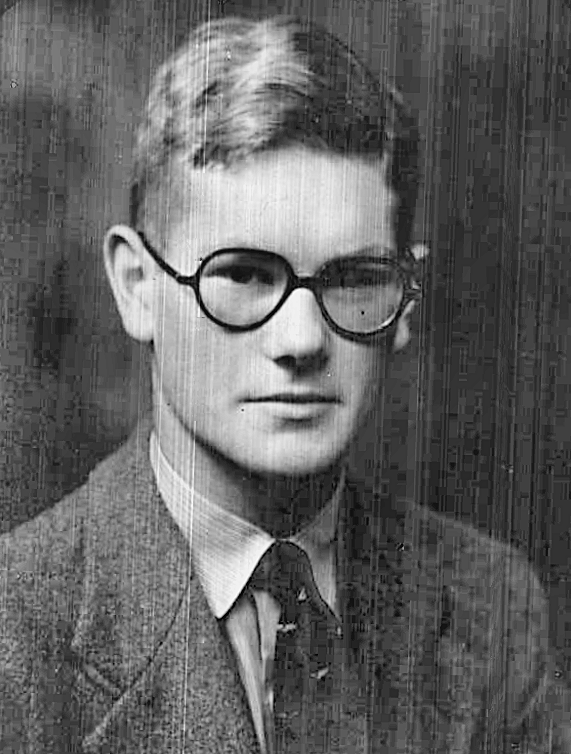 1936
1936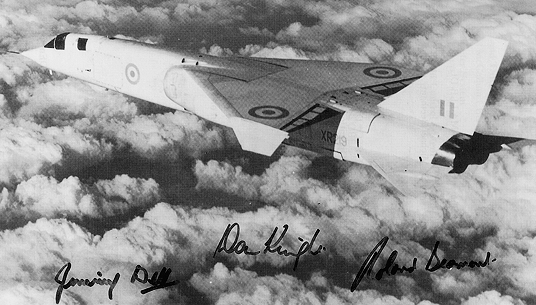

- Hits: 912